Industrial Drain Cleaning Texas: Refinery & Ship Channel
Texas industrial drain systems are a different animal from commercial sanitary. Refinery process sewers, petrochemical plant API separators, Ship Channel terminal stormwater systems, and large-diameter combined sewers carry hydrocarbon residue, heavy metals, polymer fines, and abrasive sediment that destroys equipment and triggers regulatory action when they fail. This guide is the operating playbook our crews use across the Dallas Ship Channel, the East End industrial corridor, refinery row from Allen through Baytown, and inland petrochemical complexes from Channelview to Mont Belvieu.
Industrial drain cleaning in Texas is not a plumber's job in the residential sense. It is a hybrid of hydrojetting, vacuum truck operations, regulatory documentation, and confined-space hazardous-environment work. The contractor on site needs a TSBPE Responsible Master Plumber for any building drain work, OSHA-1910.146 confined-space credentials for entry, and discharge permit awareness for the specific facility. Pricing reflects that reality. This guide covers what gets cleaned, how, why, and what to look for in a contractor.
The Five Industrial Drain Systems That Need Hydrojetting
An industrial facility on the Dallas Ship Channel typically operates five separate drain systems, each with different fluids, different failure modes, and different regulatory regimes. A serious industrial hydrojetting program addresses all five on appropriate cadences.
1. Process Sewer (Hydrocarbon-Bearing Wastewater)
Process sewers carry the water-soluble and water-emulsified portion of plant operations. At a refinery this includes desalter brine, stripped sour water, crude unit overhead condensate, and cooling water blowdown. At a petrochemical plant it includes polymerization reactor water, monomer wash water, catalyst slurries, and reaction quench streams. These are typically 10-inch to 36-inch lines running in trench or below grade to an API separator or DAF unit, then onward to the wastewater treatment plant.
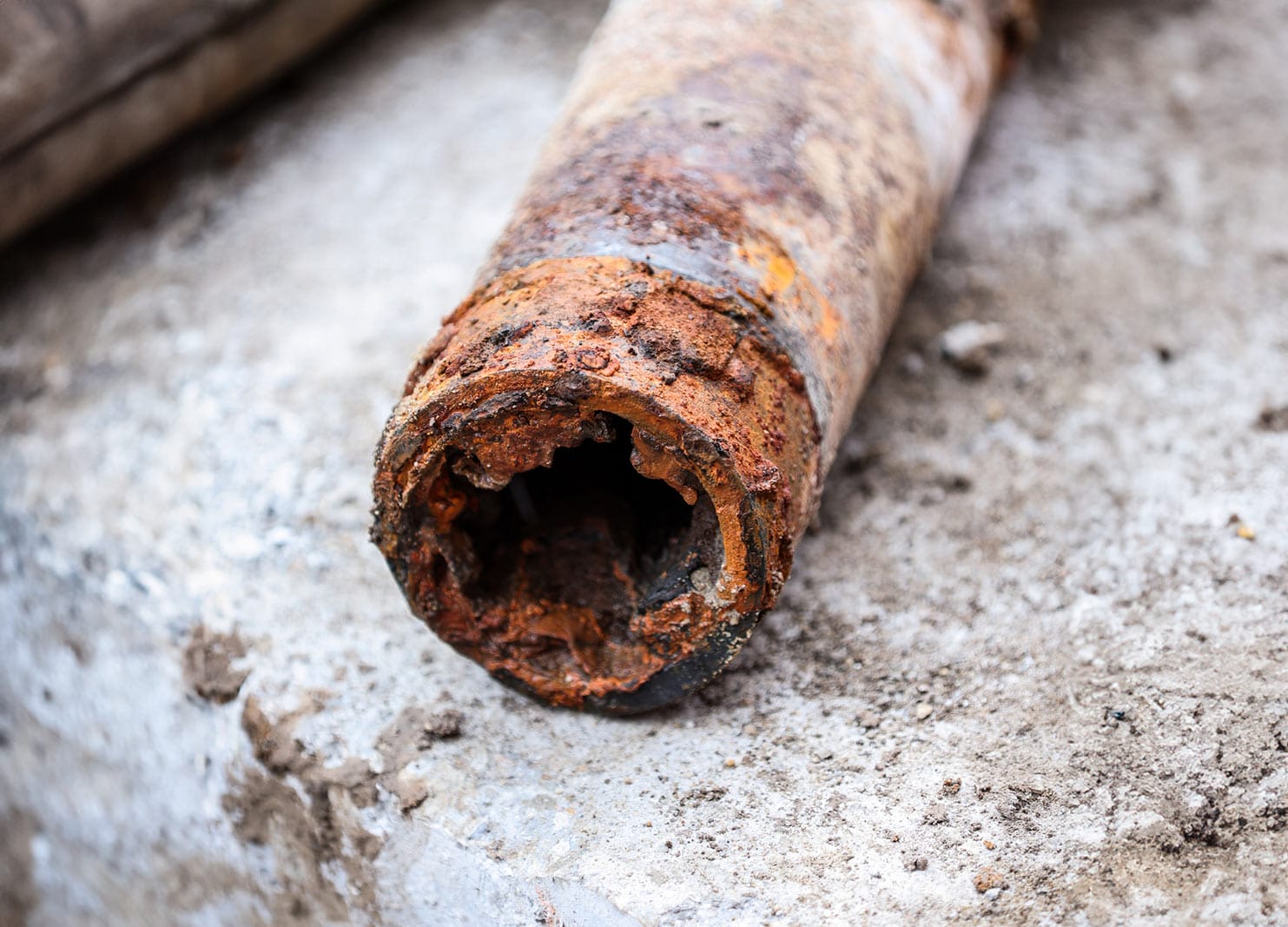
The dominant failure mode is paraffin and asphaltene deposition on pipe walls, sometimes called wax buildup. Cold-stream operations and ambient temperature drops cause heavy hydrocarbons to drop out of suspension and coat the pipe. Over months and years, a 12-inch line can lose 30 to 50 percent of its effective diameter. Snaking does nothing. Solvent cleaning is expensive and triggers air-permit issues. Hydrojetting at 4,000 PSI with a chisel-tip or rotating chain-flail nozzle is the durable industrial solution.
2. Stormwater Drains and Bermed Containment Sumps
Industrial facilities with hazardous chemical storage have bermed secondary containment, with drain valves that release accumulated stormwater after operator inspection for product. The containment drains, the perimeter storm inlets, and the plant-wide stormwater collection lines all need to function during a 25-year rainfall event. They do not. Sediment, polymer fines, ferric oxide scale, and biological growth choke these lines. When Hurricane Beryl hits, the containment overtops, and a Tier II reportable release occurs.
Pre-hurricane-season hydrojetting of stormwater collection, perimeter drains, and containment sumps is the single highest-ROI annual service for any Dallas-area industrial facility. Schedule for April or May, before tropical-system activity begins.
3. API Oil-Water Separator and DAF Unit Drains
API gravity separators and dissolved-air flotation (DAF) units are the primary oil removal stage before wastewater treatment. They have inlet manifolds, baffle drains, sludge hopper outlets, skimmer troughs, and effluent weirs — all of which clog. A clogged API inlet manifold causes upstream backup into process areas. A clogged DAF sludge hopper drain causes sludge carryover into the downstream biological treatment, killing the bug culture and triggering a permit excursion.
API and DAF cleaning is hot work. Vapor space is hydrocarbon-laden. Work requires hot-work permits, vapor monitoring, and often nitrogen purge before any hydrojetting access. Specialized industrial hydrojetting contractors handle this routinely; a residential drain cleaning company is dangerous.
4. Underground Tank Farm Spill Containment and Drain Networks
Aboveground storage tank (AST) farms have spill containment dikes with drain valves piped to a slop-oil collection system. These collection lines run hundreds of feet to a slop-oil tank or recovery sump. They carry trace product, water, sediment, and sometimes degraded gasket material. Over years they coat heavily and reduce flow. A tank-overfill event with the collection line restricted means product spilling out of the dike to the ground — a reportable Tier II release with TCEQ involvement.
5. Cooling Tower Basin Drains and Heat Exchanger Condensate
Cooling tower basins accumulate sediment, biological mass, scale, and corrosion products. The basin drain that feeds the blowdown system clogs at the worst possible time — usually during a planned turnaround when the tower is being drained for maintenance and the blowdown line is the only outlet. Hydrojetting cooling tower drain lines as part of annual cleaning is routine industrial practice that property managers and reliability engineers should be scheduling.
Dallas Ship Channel and Texas Industrial Corridor Geography
The dominant industrial corridors served by our hydrojetting operation:
Dallas Ship Channel (East End to San Jacinto Bay): Petrochemical, terminals, refineries, specialty chemical, paint and coatings, lubricants. Dominant failure modes: process sewer hydrocarbon coating, stormwater sediment, API separator clogs. Recommended program: quarterly process sewer hydrojetting on the most active lines, annual stormwater and containment full-system cleaning, pre-hurricane-season catch-up.
Allen and Cedar Hill Refinery Row: Crude refineries, tank farms, butadiene, ethylene, polymer production. Dominant failure modes: heavy paraffin and asphaltene deposition, API separator sludge hopper clogs, slop-oil collection system buildup. Recommended program: scheduled full-system hydrojetting tied to plant turnarounds; annual API and DAF cleaning regardless of turnaround.
Baytown and Mont Belvieu Petrochemical: Olefins, polyethylene, polypropylene, fractionation. Dominant failure modes: polymer fines accumulation, reactor wash water residue, cooling tower basin sediment. Recommended program: turnaround-aligned full hydrojetting, between-turnaround cooling water system service.
Texas City and Galveston Bay: Refining, fertilizer, specialty chemical, terminals. Dominant failure modes: process sewer scale and salt deposition, hurricane storm system overload. Recommended program: annual full-process hydrojetting, pre-hurricane stormwater priority service.
Channelview and Sheldon: Olefins, refining, chemical manufacturing. Same patterns as the main Ship Channel; geographic concentration matters for scheduling efficiency when our crews are mobilized in the area.
Equipment Specifications for Industrial Hydrojetting
Residential and light-commercial hydrojetting trailers do not have the pressure, flow, hose capacity, or vacuum-truck pairing to handle industrial lines. Industrial hydrojetting requires:
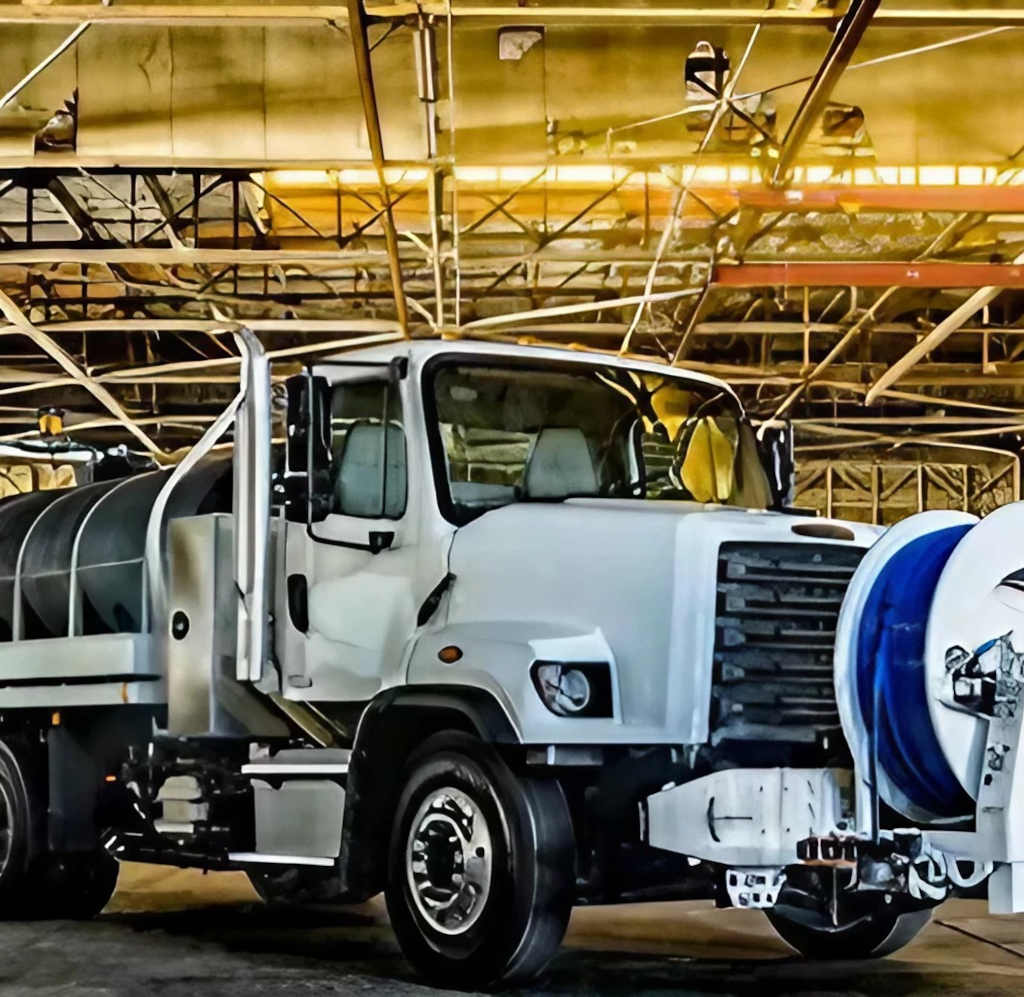
Truck-mounted hydrojetting unit: 4,000 to 5,000 PSI working pressure, 35 to 80 GPM flow. The high flow is essential — at 12-inch and 16-inch pipe diameters, lower-flow units cannot move dislodged material downstream and the line re-clogs within hours. Common production units are Sewer Equipment of America, Vactor, Sreco, US Jetting, or O'Brien class machines mounted on a 27-foot-plus truck with a debris tank.
Combination vacuum-jet truck: For lines where dislodged material cannot be allowed to flow downstream — most industrial process sewers — a combination unit jets the line and simultaneously vacuums the debris into an onboard tank. This is the standard rig for refinery and petrochemical work. Tank capacity 8 to 16 cubic yards.
Hose: 1/2-inch to 1-inch high-pressure jet hose. 500 to 800 feet on the reel for long industrial lines. Wire-reinforced for abrasive industrial waste.
Nozzle inventory: Chisel-tip for paraffin and asphaltene, rotating chain-flail for hard scale, root-cutter for biological mass, warthog or hydra-flush for bulk sediment, penetrator with extended front-jet for blocked lines.
CCTV camera with crawler: For lines 8 inches and larger, a self-propelled CCTV crawler with pan-tilt-zoom head is essential. Pre-cleaning inspection identifies the failure mode and any compromised pipe sections. Post-cleaning inspection verifies the work and documents pipe condition for the facility's reliability records.
Confined-space entry equipment: Tripod with mechanical retrieval, 4-gas monitor (LEL, O2, H2S, CO), supplied-air respirators for IDLH atmospheres, communication system, attendant.
Regulatory and Compliance Considerations
Industrial hydrojetting work in Texas operates under several overlapping regulatory regimes. The contractor needs to understand all of them before showing up.
TCEQ wastewater discharge permits: The facility has an industrial wastewater discharge permit specifying outfall composition limits, flow limits, and monitoring requirements. Hydrojetting can mobilize accumulated material into the wastewater treatment train. The work plan must address whether dislodged material goes to treatment, gets vacuumed off site, or returns to slop-oil. Excursions trigger Notices of Violation.
OSHA confined-space entry: Process sewers, API separators, sumps, and tank farm drains are confined spaces under 1910.146. Entry requires permit-required confined-space procedures, atmospheric monitoring, attendants, and rescue provisions. Many process drain spaces are also Class I Division 1 or 2 electrically classified.
Hot work permits: Hydrojetting equipment with internal combustion engines requires hot work permits in classified areas. Some facilities require diesel engines with spark arrestors and Pyronics-class equipment.
SPCC and stormwater pollution prevention: Any cleaning activity that mobilizes oil into the stormwater system is potentially reportable. The contractor needs to coordinate with the facility's SPCC plan and stormwater PPP.
NORM (naturally occurring radioactive material): Some petroleum production water systems accumulate NORM scale (radium-226 and radium-228 from formation water). Drain cleaning at production facilities, slop-oil systems, and produced water handling needs NORM screening before work begins and proper disposal of any contaminated debris.
Texas plumbing license: For work on the building drain and building sewer of any structure on the site, TSBPE licensing applies. Industrial process sewers between equipment are typically not regulated as plumbing — they are process piping — but the contract scope determines license requirements.
What Industrial Hydrojetting Actually Costs in Texas
Industrial pricing is fundamentally different from commercial. Mobilization, permits, safety personnel, equipment specialization, and documentation drive the price. Typical Dallas-area ranges:
Process sewer hydrojetting (12-inch to 24-inch, in-trench): $5,000 to $20,000 per mobilization for the day-rate crew plus equipment. Linear footage cleaned varies by deposition severity — 200 to 800 linear feet per shift typical.
API separator and DAF unit cleaning: $8,000 to $40,000 depending on tank size, vapor handling requirements, and sludge volume. Often scheduled during plant turnaround windows.
Stormwater system and containment drain network: $3,000 to $15,000 per facility for annual service, depending on linear footage and number of catch basins.
Tank farm spill collection system hydrojetting: $6,000 to $25,000 depending on tank farm size and collection line complexity.
Cooling tower basin and blowdown line cleaning: $2,000 to $12,000 depending on cooling tower capacity.
Emergency response (process upset, regulatory event, post-storm): $750 to $2,500 per hour with 4-hour minimum, plus equipment and consumables. Often deployed under existing master service agreements with facility-side credentialing already complete.
Choosing an Industrial Hydrojetting Contractor in Texas
Industrial sites should evaluate hydrojetting contractors on these criteria:
Industrial-class equipment: 4,000-PSI / 35-GPM-plus truck-mounted machines, combination vacuum-jet trucks, CCTV crawler equipment for large-diameter pipe. A contractor running residential trailers cannot do this work.
Industrial safety credentials: Active OSHA 30 cards, current confined-space entry training, 4-gas monitoring, supplied-air respirator program, drug and alcohol program, MSHA Part 46 for surface mining sites, OQ for pipeline-adjacent work. Many sites require ISN, Avetta, PEC, or DISA credentialing.
Regulatory awareness: Working knowledge of TCEQ wastewater permits, SPCC plans, stormwater PPP, RCRA waste handling. The contractor should be asking about these on the front end.
Documentation capability: Written work plans, time-stamped CCTV video, before-and-after photos, sludge volume manifests, waste disposal receipts. Industrial sites need defensible documentation for regulatory and capital planning purposes.
Master service agreement and credentialing: Industrial sites should have a small set of pre-credentialed hydrojetting contractors under MSA. Mobilizing an unknown vendor through site safety, security, contractor orientation, and credentialing takes days. Pre-approved contractors respond in hours.
Texas plumbing license: TSBPE licensed for any building-drain or building-sewer scope. Required for plant administration buildings, control rooms, lab buildings, and any structure with code-regulated plumbing.
What to Do Right Now
If you are responsible for the drain system reliability at a Texas industrial facility and you do not have a documented preventive hydrojetting program, the action sequence:
- Assess your five drain systems. Do you have current CCTV records of the process sewer, stormwater system, API/DAF separators, tank farm collection, and cooling tower basin drains? If anything is older than 24 months or has never been done, schedule baseline inspection.
- Review your last 36 months of process upsets, stormwater backups, API separator excursions, and TCEQ reportable events. Trace each one back to drain system condition. The cost of those events drives the ROI on a preventive program.
- Align hydrojetting service with your turnaround schedule. Process sewer hydrojetting and API cleaning are most efficient during turnarounds — equipment is offline, vapor levels are controlled, and operations are available for coordination.
- Add pre-hurricane-season stormwater hydrojetting to the May calendar. Hurricane Harvey and Beryl both produced industrial environmental events at facilities with restricted stormwater drainage. The cost of one Tier II reportable release exceeds 10 years of preventive cleaning.
- Get pre-credentialed industrial hydrojetting contractors on MSA. When a process sewer backs up at 2 AM on a holiday weekend, you do not want to be calling vendors for the first time.
TX Hydrojet operates industrial-class truck-mounted and combination vacuum-jet equipment across the Dallas metro, Ship Channel, Allen, Cedar Hill, Channelview, Baytown, Mont Belvieu, Texas City, and Galveston Bay industrial corridors. We hold TSBPE plumbing licenses, ISN credentialing, OSHA 30 trained crews, and confined-space entry certified personnel. For industrial drain cleaning in Texas — process sewers, API separators, stormwater, tank farms, cooling towers, or emergency response — call (832) 203-7987 or request a quote at txhydrojetting.com/contact.
TX Hydrojet & Plumbing Team
Our team of licensed, insured plumbers in Dallas, TX brings decades of combined experience to every job. We specialize in hydro jetting, drain cleaning, sewer repair, and 24/7 emergency plumbing services across the Dallas-Fort Worth metroplex.
(832) 203-7987